

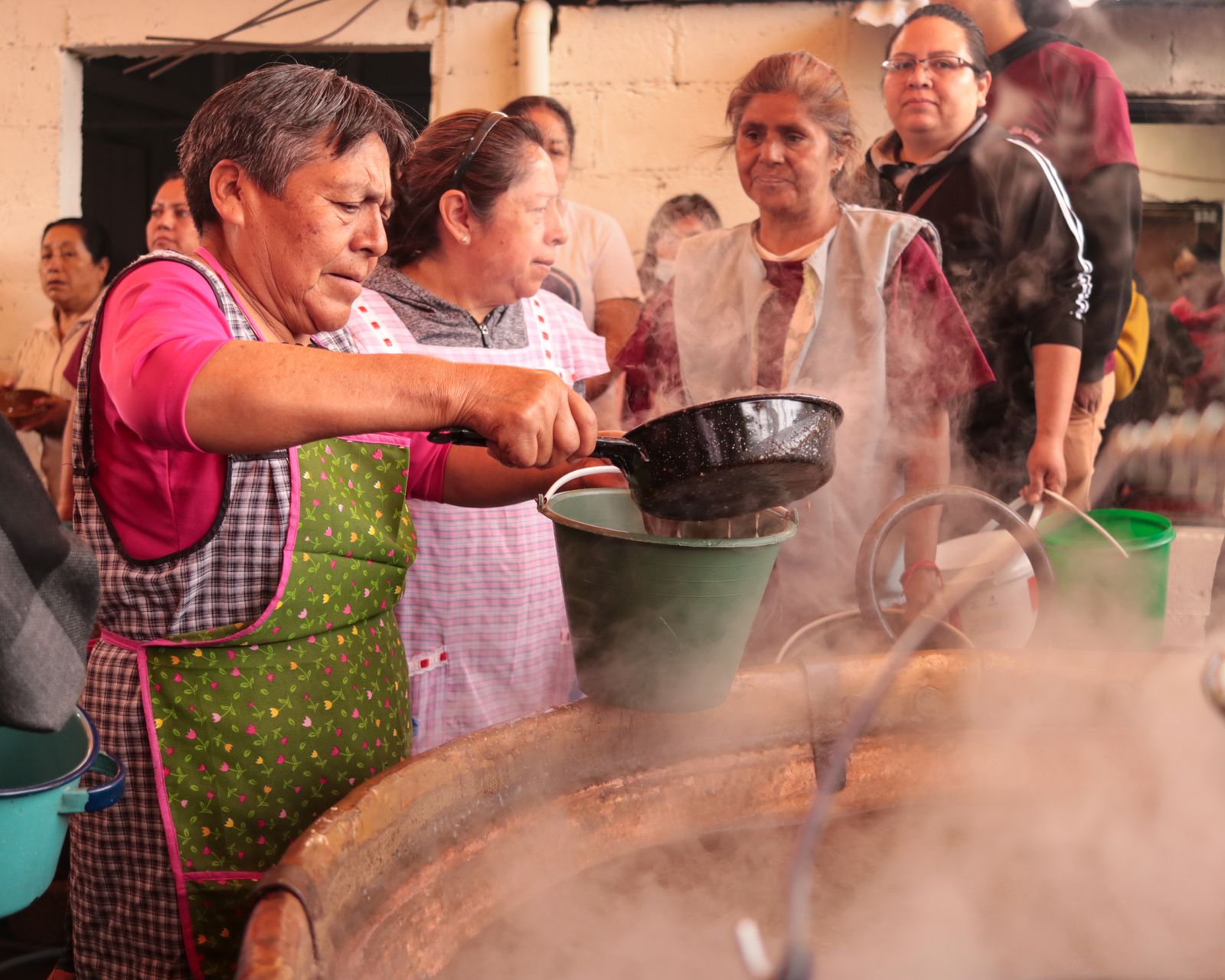
There is a parallel food system in this country that almost nobody advertises. It runs out of church halls and community centres, kitchens attached to gurdwaras and mosques, and a network of charity-run dining rooms that exist for the simple reason that food gets thrown away and people get hungry. Most of it is free. None of it requires you to prove anything about your income, your address, or why you came. You walk in, you eat, you leave.
Here is the map, in the rough order you should try things.
FoodCycle — the easiest one to find
FoodCycle runs free, three-course community meals in over 80 locations across the UK, cooked by volunteers from surplus food that supermarkets and wholesalers were about to bin. The dining room is the point as much as the food is — long tables, no separation, no targeting. You sit down with whoever else is there.
- What you get: a starter, a main, a dessert. Vegetarian by default; vegan and gluten-free options on request. Tea and coffee throughout.
- Who can come: anyone. They mean it. Students, pensioners, families, people between flats, people who just want company. No paperwork, no proof, no questions.
- When: most locations run once a week, often on a Sunday or Wednesday evening. Some run twice. Check the locations page for the one nearest you.
- What to bring: nothing. You can offer to help wash up at the end if you want to.
If you only try one thing on this list, try FoodCycle. The barrier to entry is by design the lowest — the team has worked hard to make it feel like a restaurant, not a service.
Gurdwaras — the langar, served daily, to anyone
Every Sikh gurdwara in the country runs a langar — a free community kitchen that has been part of the religion for 500 years. The kitchen is open to anyone, of any faith or no faith, regardless of background. The food is hot, vegetarian, and prepared fresh, often in enormous quantities, every single day.
You take off your shoes, cover your head (a scarf provided at the door), sit on the floor in the dining hall, eat what's brought to you. There is no donation expected. If you can help with the dishes afterwards, you'd be welcome.
The biggest in Europe is Gurdwara Sri Guru Singh Sabha in Southall, west London — they serve thousands of meals a day. But every gurdwara, in every city, runs the same system. Look up your nearest one; walk in any afternoon.
Community fridges and pantries
Hubbub coordinates over 500 community fridges across the UK — places that collect surplus food from local shops, restaurants, and bakeries and put it out for anyone to take. Most run free hot drinks alongside, and many have evolved into informal community kitchens with a hot meal once or twice a week.
These overlap with community pantries (members pay £3–£5 for a bag of groceries worth £20+) and social supermarkets like Your Local Pantry. The pantries aren't free in the same way, but the cost-to-value ratio is unmatched.
The Salvation Army and church meal services
Most British towns have at least one church-run weekly meal. They tend to run in the late afternoon or early evening, last about ninety minutes, and serve a hot main with bread and tea. The Salvation Army runs the largest network — find your nearest at salvationarmy.org.uk.
Some are framed around homelessness or hardship; many aren't. The pattern is the same: open door, hot food, no questions. Worth knowing about regardless of whether you need them right now.
Warm hubs and warm spaces
Introduced during the 2022 energy crisis and still running in most councils, warm hubs are libraries, community centres, and church halls that stay open, heated, and stocked with hot drinks and (often) a meal. They were a winter intervention but most councils kept the network running year-round.
Find yours via your council website or Warm Welcome Spaces — a national directory. They're particularly useful between November and March.
Food banks that serve meals, not just parcels
A traditional food bank gives you a parcel of tinned and dried goods to take home and cook. Useful if you have a kitchen and the energy to cook. Less useful if you don't.
A growing minority of food banks have evolved into drop-in eateries that serve hot meals on the premises. The Trussell Trust directory and the independent network IFAN let you filter for sites that serve cooked food. For a traditional parcel you typically need a referral from your GP, school, or Citizens Advice; for the drop-in meals you mostly don't.
Holiday-only schemes
Two worth knowing if your timing is right:
- Holiday Activities and Food (HAF) programme — funded by the Department for Education, runs free meals plus activities for children eligible for free school meals during Easter, summer, and Christmas school holidays. Apply through your local council.
- Christmas community meals — every council has them, usually 23–26 December, in church halls and community centres. They book up; check from late November.
How to use this list
Pick one for this week — FoodCycle, your nearest gurdwara, or a community fridge. Walk in like you'd walk into any cafe. The volunteers running these places are, almost without exception, hoping you'll come, hoping you'll come back, and hoping you'll tell someone else. That's the whole model.
What there isn't, on any of these, is a hidden cost or a sign-up funnel or a card swipe at the end. They're not trials. They're not freemium. They're just food, served free, because the alternative is throwing it away.
Eat well.