

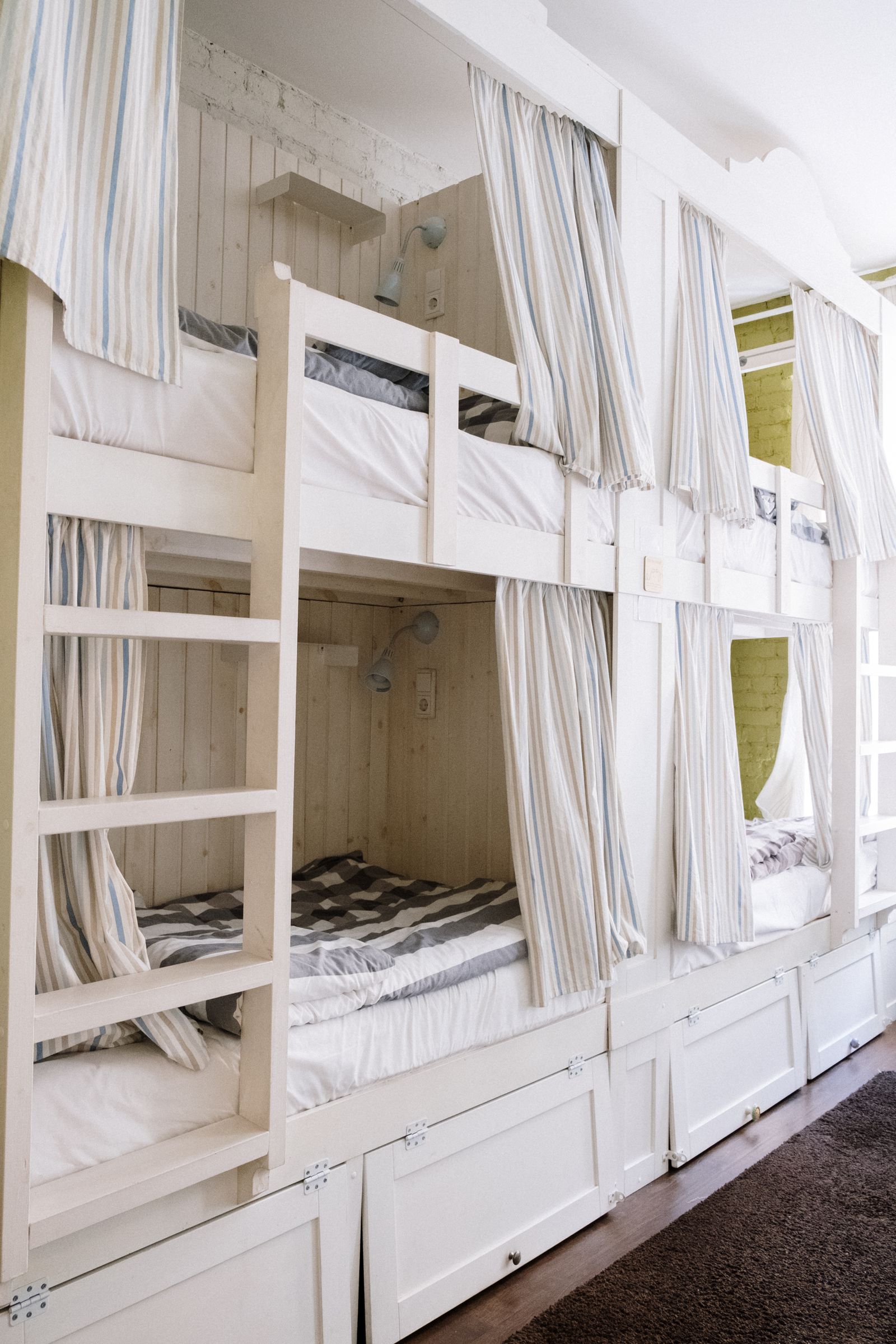
A £25 hostel bed doesn't sound like housing until you do the monthly maths: about £750, with no deposit, no bills, no council tax, no contract and no notice period — in cities where a room costs more than that before the boiler even comes on. For a specific few months of a specific kind of life, a hostel is not the desperate option. It's the liquid one.
The maths, honestly
Dorm beds in London run roughly £25–£45 a night depending on season and postcode; in most other UK cities it's more like £15–£25. At face value that's £450–£1,350 a month, which only sometimes beats a room. But the rack rate isn't the long-stay rate. Independent hostels routinely do weekly and monthly prices well below the nightly one — they'd rather have a reliable bed filled all winter than gamble on weekend tourists — and the only way to find those rates is to ask at the desk or email directly.
Booking platforms are for scouting, not staying. Use Hostelworld to find places and read reviews, book a night or two, then negotiate the longer stay in person — hostels pay commission on platform bookings and will usually shave that off a direct deal. Then remember what the price includes: heating, wifi, water, and the £1,000+ deposit you didn't pay. A £700 hostel month often beats a £700 room month by £150 of bills and a month of freedom.
Who this actually suits
The honest use cases are the in-between ones:
- Starting a job in a new city and refusing to sign a 12-month tenancy for a place you've never seen, in a city you don't know yet.
- Between tenancies — the awkward six weeks when one contract ends before the next begins.
- Probation periods. If the job might not stick, neither should your housing.
- Seasonal and short-contract work, where the work moves and you'd rather move with it.
Who it doesn't suit: light sleepers, anyone doing video calls for a living, and anyone who needs their own kitchen shelf to feel human. Know which one you are before you commit a month to a bunk — and if you're not sure, book a week before you book a month. The £30 difference between a weekly and monthly rate is cheap insurance against discovering you hate it on night three.
There's also the possessions question. A dorm life is a rucksack life, so anything beyond a rucksack needs a home: a friend's garage, a parent's loft, or a small storage unit from around £20 a month. Factor that into the comparison, because a room includes storage and a bunk doesn't.
Choosing a hostel you can actually live in
A weekend hostel and a liveable hostel are different products. When you scout, check for:
- Small dorms or pod-style bunks with curtains and a reading light — the difference between sleeping and enduring.
- A proper locker big enough for a laptop and your bag, and a luggage store.
- A real kitchen, because eating out is how hostel living quietly gets expensive.
- Laundry on site or nearby.
- The long-stay policy. Some hostels cap stays at around two weeks; others quietly cultivate a floor of long-termers. Ask which you're in — the second kind has a completely different atmosphere, usually a better one.
- Female-only dorms, if that's relevant to feeling safe enough to sleep well for weeks.
YHA hostels offer predictable standards and decent kitchens; the long-stay culture, though, mostly lives in independents. City YHAs in particular tend to be geared for tourists and school groups, which makes them fine for gap nights and less fine for a month of your life.
The admin nobody warns you about
Living somewhere without a tenancy creates paperwork friction, most of it survivable. You can register with a GP without a fixed address — practices are not allowed to insist on one, whatever the receptionist implies, and Citizens Advice can back you up on that. Post is the awkward one: some hostels will hold mail for regulars if you ask nicely, and a family member's address handles the rest. App-based banks tend to be more relaxed than high-street ones about address quirks. Council tax, pleasingly, is simply not your problem while you're a hostel guest.
When it stops adding up
The hostel discount decays. Somewhere around month two or three, the hidden costs compound: you cook less and spend more, you own nothing you can't carry, and the sleep debt from other people's 6am alarms starts charging interest. The move is to treat the whole thing as a funded transition — you're saving £150–£300 a month against a rented room, plus the deposit you haven't parked, so bank that difference deliberately and let it become the deposit and first month on a real place.
A hostel is a terrible home and an excellent bridge. Just make sure the far end of the bridge is attached to something.