

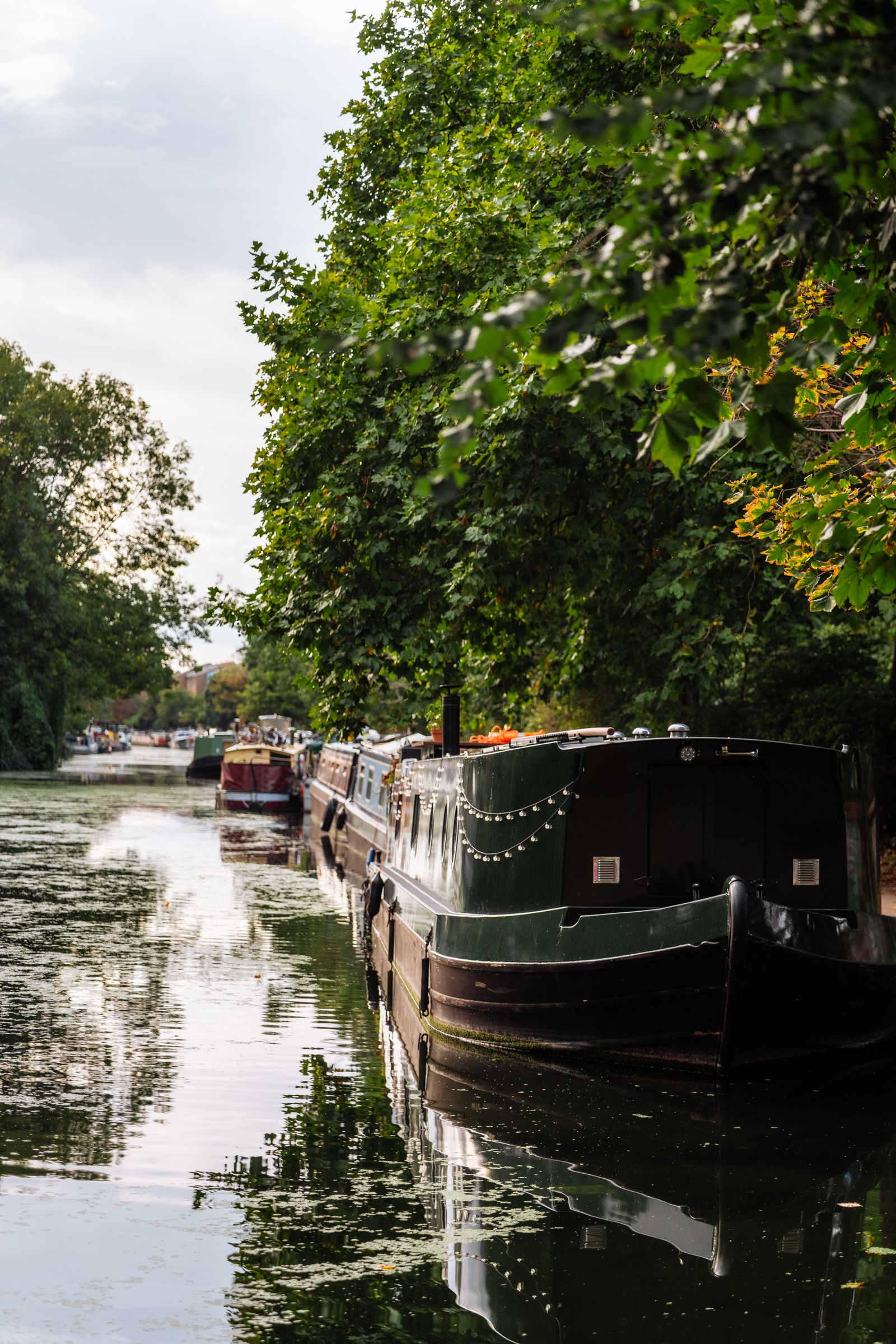
Around 15,000 people now live aboard boats on Britain's inland waterways, and the pitch is seductive: a home for the price of a secondhand car, no landlord, and a different view every fortnight. Some of it is true. The "free living on water" version is mostly a myth — but the genuinely cheap version is real, and a continuous cruiser with their sums right can live afloat for £400–£700 a month all-in, well under a third of a London room.
The catch is that almost every cost people forget is the one that sinks the budget. Here's the honest breakdown.
The boat itself — where "free" does and doesn't exist
A liveable secondhand narrowboat runs £20,000–£50,000; a tired project boat can be had for under £15,000. Genuinely free boats are rare and almost always a warning — a free boat is usually one that costs more to make safe than to buy outright. The nearest thing to free:
- Boats listed "free to a good home" when an owner dies or moves into care and the family wants it gone. These exist on Facebook groups and Apollo Duck, but assume a five-figure restoration unless a surveyor says otherwise.
- Boat-share and guardianship — you live aboard someone else's boat cheaply (or rent-free) in exchange for maintaining it. Genuinely low-cost, occasionally free, but you don't own the asset and can be given notice.
Pay a marine surveyor £400–£600 before you buy anything. It is the single best money you'll spend, and skipping it is how people end up owning a £20,000 problem.
The licence — the cost nobody budgets for
This is the one that catches everyone. To keep a boat on the Canal & River Trust network you need a licence, and for a typical narrowboat it's roughly £1,000–£1,300 a year in 2026, rising with length. The Trust has also been phasing in higher fees for continuous cruisers and for wider boats, so check the current rate for your exact boat before you commit.
On top of the licence:
- Boat Safety Scheme certificate — the boat's MOT, required every four years, around £150–£200.
- Insurance — third-party is mandatory to licence; £150–£300 a year.
None of this is optional, and unlicensed boats get chased, so build it in from day one.
Mooring — this is where the real money goes (or doesn't)
Mooring is the fork in the road, and it splits liveaboards into two tribes.
Residential mooring is a fixed berth you're allowed to live at, with a postal address and often water and electric hookup. It is also the single biggest cost — £3,000–£10,000+ a year, and in London far more. A residential mooring effectively reintroduces rent. Worth it for stability, a school catchment, or a job with fixed hours.
Continuous cruising is the cheap route, and the source of the "free mooring" idea. As a continuous cruiser you pay no mooring fees at all — you're entitled to moor free on most towpath for up to 14 days in one spot. The deal is in the name: you must genuinely keep moving in a progressive journey around the network, not shuffle between two lampposts. The Canal & River Trust enforces this, and getting it wrong risks your licence. Done honestly, it's the closest thing to free housing in Britain — and it's why the cheapest liveaboards are always the ones who actually cruise.
The running costs people forget
A boat is a small off-grid house, and the utilities don't vanish — they change shape:
- Heating and fuel — a solid-fuel stove plus coal/wood, or diesel; budget £40–£100 a month in winter. A cold, damp boat is the most common reason people give up.
- Diesel for the engine — running the engine charges the batteries and moves you; £30–£80 a month depending on how much you cruise.
- Gas — bottled LPG for cooking and sometimes hot water, a bottle every few weeks.
- Water — free from canalside taps, but you carry it in a tank and run out at the worst moments.
- Toilet — either a pump-out (£15–£25 a time at a marina) or a composting/cassette loo you empty yourself. Unglamorous, central to the budget.
- Maintenance and blacking — the hull needs re-coating ("blacking") every 2–3 years, £500–£1,000 out of the water. This is the sinking fund people skip and regret.
Add it up and a moving continuous cruiser lands around £400–£700 a month; a residential mooring pushes that well past £1,000 once the berth is counted.
The things that aren't about money
The budget is only half the decision. The rest is the bit the YouTube tours skip:
- Damp and condensation are constant; ventilation and a dehumidifier are not optional.
- No fixed address complicates banking, GP registration, and the electoral roll — though a Royal Mail PO Box, a marina address, or a c/o address all solve it, and liveaboards have it sorted.
- Winter is hard work — fetching coal, breaking ice, keeping the stove in. Romantic in October, relentless in February.
- It's a lifestyle, not a hack. People who treat a boat as cheap rent tend to last one winter. People who actually want to live on water tend to stay for years.
So is it cheap?
Honestly: yes, if you continuously cruise and do your own maintenance; no, if you want a fixed London mooring and a quiet life. The free-boat dream is mostly a trap, but the low-cost reality is solid — a paid-off secondhand narrowboat, an honest cruising pattern, and a stove you're willing to feed will house you for less than almost anything on dry land.
The water's been an escape hatch from British rent for decades. It just asks for competence instead of money — and that's a trade more people should know is on the table.