London's free museums get all the column inches, but the rest of Britain quietly runs some of the best free collections in Europe — and almost nobody plans a day around them. While the South Kensington trio absorbs the tourists, Glasgow, Liverpool and Cardiff offer national-quality museums with free admission, shorter queues, and none of the £60 off-peak train fare into the capital.
The policy behind all this is worth knowing. In 2001 the government scrapped entry charges at England's national museums, and the devolved nations did the same with theirs. That decision has survived austerity, a pandemic and every budget since, so in 2026 free admission is still standard at every national museum in England, Scotland, Wales and Northern Ireland. Special exhibitions charge. The permanent collections — the actual point of the building — do not.
Glasgow and Edinburgh
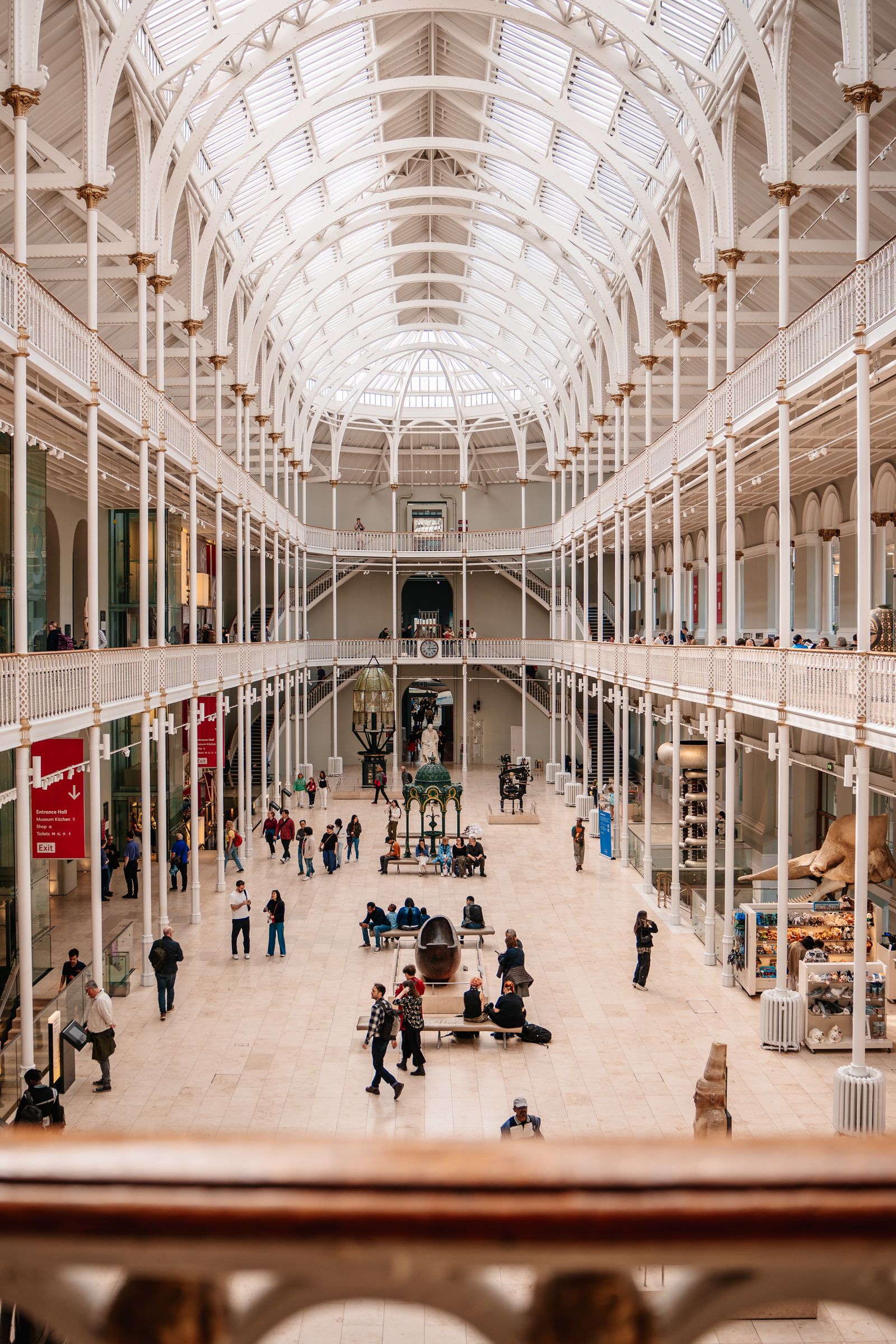
Glasgow might be Britain's best free-museum city per square mile. Kelvingrove Art Gallery and Museum holds Dalí's Christ of Saint John of the Cross, a Spitfire hanging from the ceiling and a daily organ recital, all free. The Riverside Museum, a Zaha Hadid building full of trams, locomotives and a recreated cobbled street, is free. The Burrell Collection — one shipping magnate's hoard of Degas, medieval tapestries and Chinese ceramics, sitting in a park — is free too. Across the M8, Edinburgh answers with the National Museum of Scotland and the Scottish National Gallery, both free, and both comfortably a full day each if you let them be.
Liverpool and Manchester
National Museums Liverpool is effectively a citywide free ticket. The Walker Art Gallery (Rembrandt, Stubbs, Hockney), World Museum, the Museum of Liverpool and the Maritime Museum are all free, and most are within walking distance of one another — you can do three in a day without touching a bus. Manchester counters with the Science and Industry Museum on the site of the world's oldest surviving passenger railway station, plus Manchester Art Gallery, the Whitworth and the People's History Museum. All free, though the People's History Museum will suggest a donation, and it earns one.
The North East, Yorkshire and beyond
The pattern repeats wherever you look, if you know which doors are unlocked:
- Baltic, Gateshead — a flour mill turned contemporary art space with a free viewing deck over the Tyne.
- Great North Museum: Hancock, Newcastle — natural history and Hadrian's Wall archaeology, free.
- National Railway Museum, York — Mallard and two hundred years of railway history, free, in a city where nearly everything else charges.
- National Science and Media Museum, Bradford — free, freshly refurbished, and still riding the afterglow of the city's 2025 UK City of Culture year.
Wales and Northern Ireland
Amgueddfa Cymru — Museum Wales — runs seven national museums, every one of them free. National Museum Cardiff holds the Davies sisters' collection of Monets and Cézannes, one of the best Impressionist rooms outside Paris. St Fagans National Museum of History, a village of dismantled and re-erected historic Welsh buildings on the edge of Cardiff, is regularly voted Britain's favourite museum; entry is free, though the car park isn't. In Belfast, the Ulster Museum is free while Titanic Belfast next door charges around £25 a head — do the free one first and then decide whether you still need the paid one. Most people don't.
Oxford, Cambridge and the university collections
University museums are the quiet giants of this list. The Ashmolean in Oxford is the oldest public museum in Britain and free; so are the Pitt Rivers, with its shrunken heads and totem pole, and the Museum of Natural History it hides behind. Cambridge has the Fitzwilliam, free, plus a scatter of smaller free university museums — the Sedgwick's fossils, the Whipple's scientific instruments — that most visitors walk straight past. These are working research collections that happen to let the public in, which is why they feel less like attractions and more like being trusted with something.
What still costs money
Free admission is real, but the buildings have learned to make it back at the edges. Budget for:
- Special exhibitions — typically £8–£20, always optional, occasionally worth it.
- The donation ask at the door — voluntary, usually £5. Give if you can; these places run on it.
- Parking — the out-of-town sites like St Fagans charge a few pounds, so arrive by bus or train where you can.
- The café and gift shop — the actual business model. A flask and a sandwich in your bag beats an £11 museum lunch.
If you find yourself paying for exhibitions more than a few times a year, Art Fund's National Art Pass — around £80 annually — gets you 50% off major shows and free entry to hundreds of charging museums and historic houses. Below that frequency, skip it; the free network is already enormous.
The capital's museums are magnificent, but they were never the whole story. The collections are national. The only London premium is the train fare — and now you don't need to pay that either.